I noted yesterday that a city government was exploring the use of eminent domain to take a private golf club, for the purpose of turning the course into a public golf course. The takings in the Kelo opinion were said to be for the public purposes of economic development. Of course the term public purposes is not the term found in the Takings Clause. The term in the takings clause is public use. If government takes a private golf course to then be the owner and manager of the course, and if government then says the course is a municipal or public golf course, wouldn't government be taking private property for public use?
Suppose we decide the answer is yes. Doesn't taking a private golf course to turn it into a public golf course seem to be something we don't want government to have the power to do?
Friday, March 10, 2006

Thursday, March 09, 2006
Who Has An Idea For Mr. Smith's Land?
LA Daily News - Santa Clarita:
What does this sound like? Doesn't it sound like a city council is sitting around looking at property that belongs to others, assuming that it can decide how people use their own property?
And, what's even worse, we have parcels of land owned by private individuals, and it sounds like the city council is going to ask for project proposals from other people for the utilization of those parcels. "Hey, is there any body out there that would like to do something with Frank Smith's parcel at Fifth and Main? Just let us know what you have in mind, and if we like your idea, we can get the parcel for you!"
"In order to develop three sites viewed as key to improving downtown Newhall, the city may resort to invoking eminent domain if officials aren't satisfied with the property owners' plans for their land.
Such decisions will be up to the Santa Clarita City Council, acting as the city's redevelopment agency. The agency will look at current uses, developer's proposals and the property owners' plans for high-profile sites in the deteriorating business district.
'The property owners could choose to proceed or the city could do a request for proposals to develop the community project that would have the greatest impact to revitalize downtown,' said Paul Brotzman, the city's director of community development."
What does this sound like? Doesn't it sound like a city council is sitting around looking at property that belongs to others, assuming that it can decide how people use their own property?
And, what's even worse, we have parcels of land owned by private individuals, and it sounds like the city council is going to ask for project proposals from other people for the utilization of those parcels. "Hey, is there any body out there that would like to do something with Frank Smith's parcel at Fifth and Main? Just let us know what you have in mind, and if we like your idea, we can get the parcel for you!"
Taking Private Golf for Public Golf
Newsday.com:
And there's this:
[Frank Eltman, "Lawsuits in eminent domain fight over suburban golf club," Newsday.com, March 7, 2006.]
"Lawsuits were filed Tuesday aimed at stopping an affluent suburban village from using the legal concept of eminent domain to take over a privately owned golf course."Wow, taking a private golf club to turn it into a public golf course. Now I'm really getting angry about eminent domain abuse.
And there's this:
"Wilson said in a statement that the takeover "has nothing to do with a master plan that promotes the public good or eliminating blight, issues usually behind eminent domain. Rather, it is a naked grab for private property in an apparent effort to satisfy the private desires of a few elected officials."No kidding? Politicians would be like that?
[Frank Eltman, "Lawsuits in eminent domain fight over suburban golf club," Newsday.com, March 7, 2006.]
Eminent Domain & Love Canal
Bruce Yandle tells the story of Love Canal which includes an interesting aspect that involves eminent domain. Of course, Love Canal is a hazardous waste site near Niagara Falls, N.Y.
Love Canal was originally created to supply water to hydroelectric generators. Later the area was purchased by Hooker Electrochemical Company, which became Hooker Chemicals and Plastics Company later still. In 1942 Hooker began using Love Canal to dispose of wastes.
In 1946 the Niagara Falls Board of Education told Hooker Chemical it was interested in purchasing the Love Canal parcel of land so it could build an elementary school there. Apparently Hooker said it was not interested.
In 1952 the Board of Education once again asked Hooker if it would sell the parcel. In addition, the Board indicated that it would use condemnation proceedings against the site if Hooker refused to sell voluntarily. Interesting, eh? Now it gets even more interesting:
Love Canal was originally created to supply water to hydroelectric generators. Later the area was purchased by Hooker Electrochemical Company, which became Hooker Chemicals and Plastics Company later still. In 1942 Hooker began using Love Canal to dispose of wastes.
In 1946 the Niagara Falls Board of Education told Hooker Chemical it was interested in purchasing the Love Canal parcel of land so it could build an elementary school there. Apparently Hooker said it was not interested.
In 1952 the Board of Education once again asked Hooker if it would sell the parcel. In addition, the Board indicated that it would use condemnation proceedings against the site if Hooker refused to sell voluntarily. Interesting, eh? Now it gets even more interesting:
"Hooker documented the waste stored in the canal and sold the parcel to the city for one dollar. The deed of transfer indemnified Hooker for all potential future liabilities and claims. The transfer also called for continued testing of the chemical waste site. With the passage of time, the Board of Education built a grammar school in the vicinity of the canal and sold the unused land to a residential developer. Documentation of the chemical wastes disappeared in the transaction.
Twenty-four years after Hooker had sold the land and following heavy highway construction and an unusually wet winter, residents of the Love Canal community began to experience problems with soil upheavals, chemical burns and contaminated groundwater. Homes were invaded by chemical wastes; grass and other vegetation died. Panic swept the residential community. In 1978 , Love Canal was declared a national disaster area, the elementary school was closed, 800 families were evacuated, and Hooker Chemical Company was targeted as the villian." (p. 78-79)
Tuesday, March 07, 2006
Don't Kelo My House
WSJ.com:
Wow. Only 1 legislative no vote. Now, that's a super majority."The latest blowback comes from South Dakota, whose Governor this month signed a law prohibiting the state from using its power of 'eminent domain' to take private property for private economic development. No exceptions. No loopholes. The bill passed by unanimous vote in the state senate and 67-1 in the house."
Monday, February 27, 2006
Oregon's Anti-Regulatory Takings
OpinionJournal
[The Anti-Kelo Case: Oregon offers the nation a model for reform, OpinionJournal, Thursday, February 23, 2006 12:01 a.m. EST]
"Oregon's ballot measure, which passed with a mere 61% of the vote, required authorities to either compensate landowners for any reduction in the value of their property, or exempt them from the regulations. This was the second time voters had passed the measure, the first version having been tossed out on a technicality by the state's notoriously liberal Supreme Court."OpinionJournal describes the Oregon measure as "anti-Kelo," but it seems to me it is anti-regulatory takings. It seems to me regulatory takings should, in general, fit within the Takings Clause, and the Oregon measure which was approved by a significant majority of voters seems to say so too.
[The Anti-Kelo Case: Oregon offers the nation a model for reform, OpinionJournal, Thursday, February 23, 2006 12:01 a.m. EST]
Thursday, February 16, 2006
Kelo Economics?
Lior Strahilevitz makes what sounds like an economic argument in favor of the Kelo opinion:
The analysis assumes there is both a significant option value and existence value associated with the home. This implies a positive externality market failure. I assume, therefore, that these conditions suggest that destroying the home would not be the highest valued use of the property. I disagree that the proper policy response, based upon efficiency, is for government to take the home and transfer it to someone who promises to preserve the home.
The general story I tell with respect to positive externalities is that the government's policy response should be to cause the marginal external benefit to become internalized in market prices. This can be done by government subsidizing the market activity that generates the positive externality. The story about the economics of positive externalities is usually not that government policy should take the market activity from private individuals and give it to those in the community who are enjoying the external benefit. Actually, I don't think I've ever heard policy proposals for positive externalities that sound like this.
I suggest that the economic efficiency analysis of this hypothetical would imply that government should offer an annual subsidy to reflect the existance value plus the option value enjoyed by others in the community because of the home. Such a policy would result in the present owner of the property seeing the value enjoyed by others in the community because of his home. This is exactly the mechanism by which positive externalities become internalized and efficiency can be achieved.
I suppose, given the nature of this hypothetical, that the owner of the home might not see the annual subsidy a sufficient incentive not to burn his home. Yet, if this were the case, and if we were to assume that government figured out the correct value of the external benefit, then I think we would have to say the owner's use of the property was the higher valued use vis a vis preservation of the home. There would be an additional consideration here as well. There would be a good chance (it seems to me) that when government offered to pay an annual subsidy for preservation of the home that one result would be an increase in demand for the property. Someone might well choose then to offer a sufficient amount to the home owner to successfully purchase the home, convert it to a museum, and collect the annual subsidy as well as the annual revenue from operation of the home as a museum.
I believe there is another possible efficient policy response by government to the positive externality posed here. Government could purchase the property from the person who owns the property. Of course, this starts to encourage us to think of the efficient policy being the use of eminent domain. That is, the home's owner has refused to accept "fair market value" to sell the home, and this is the reason it is suggested that taking the home can cause the property to be transferred to a higher value use. Would the efficiency analysis in this case suggest that government should only offer to pay "fair market value" to obtain the home? I think not. After all, this case is one of a positive externality and that means that there is a divergence between marginal private benefit and marginal social benefit, and the "fair market value" is going to reflect only the lower marginal private benefit. For efficiency, government's offer price should be up to the full marginal social benefit, which according to the assumptions of the hypothetical is a value that is significantly greater than the fair market value.
Of course, there is still the possibility that the owner of the home will not sell. Once again, this would imply that the higher valued use of the property was with the present owner. I suppose one might hear the suggestion that, as the author of the analysis suggests in his update, the owner of the home is a nihilist who holds antisocial preferences. On this the author suggests:
I think that efficiency analysis of this hypothetical suggests another very important point. The takings clause requires "just compensation" when government takes private property for public use. I will take it for granted that if government took the home in question and then created a publicly owned and operated museum that preserved the home, the government would be taking private property for public use. For this taking to be constitutional, compensation would have to be "just." What is just compensation in this case? Is just compensation in this case "fair market value?" I think efficiency analysis would suggest that it is not. If we are going to justify the use of eminent domain to correct the market failure of a positive externality, then it seems to me we have to recognize that "fair market value" is not the full economic value of the property. The full economic value of the property is the marginal social benefit, and this value is assumed in our hypothetical to be significantly greater than the market value. Therefore, it seems to me, just compensation for this taking should be defined in terms of the full social benefit of the preserved property.
On efficiency grounds, for the hypothetical being discussed, I conclude that the best efficiency policy is for government to offer a subsidy for preservation to reflect the marginal external benefit associated with option and existence values. I might be willing to accept the idea that the power of eminent domain is also consistent with efficiency, but ONLY IF "just compensation" is defined to reflect the external benefit not reflected in the market value of the property.
Finally, I want to say something that moves me away from economic efficiency analysis. Professor Strahilevitz writes:
Suppose that a wealthy nihilist owns a Frank Lloyd Wright home and announces a completely credible intention to burn it down. Should the state be able to condemn the property and, upon paying the nihilist fair market value, transfer it to the Frank Lloyd Wright Trust, a private entity that announces (again, completely crediby) an intention to turn it into a museum?I take the author's argument to be an economic argument because of his use of the concepts of existence value, option value, and highest valued use. Further, I assume the normative framework he is relying upon is that of economic efficiency. I believe his analysis is incorrect on efficiency grounds.
The holding of Kelo (and earlier cases like Berman v. Parker) suggest an affirmative answer, and I believe that the state should be able to use the eminent domain authority to condemn the home from the nihilist and transfer it to the preservationist. There is a strong economic argument for liability rule protection in this hypothetical, as opposed to property rule protection. There are probably enough people (neighbors and non-neighbors) who would derive substantial 'existence value' from knowing that the home survives and value the option of being able to drive by it or take a tour to outbid the nihilist in a world of no transaction costs. But high transaction costs will probably prevent those people from getting together and outbidding the nihilist for the home, even though they are the highest value users. So unless there are a large number of nihilists out there who derive 'non-existence value' from the home, it would seem that using the government's eminent domain authority to preserve the home is welfare maximizing.
[. . . .]
. . . . Preserving the home is its higher value use, and the government is merely acting to transfer property to a higher value user. . . . .
[. . . .]
. . . . I believe that thoughtful people tolerate eminent domain for the purpose of creating roads or airports because they recognize that these types of uses will usually enhance social welfare, and they resisted the use of eminent domain in Kelo based on skepticism about whether the government was a good agent for the public's interests there. . . .
The analysis assumes there is both a significant option value and existence value associated with the home. This implies a positive externality market failure. I assume, therefore, that these conditions suggest that destroying the home would not be the highest valued use of the property. I disagree that the proper policy response, based upon efficiency, is for government to take the home and transfer it to someone who promises to preserve the home.
The general story I tell with respect to positive externalities is that the government's policy response should be to cause the marginal external benefit to become internalized in market prices. This can be done by government subsidizing the market activity that generates the positive externality. The story about the economics of positive externalities is usually not that government policy should take the market activity from private individuals and give it to those in the community who are enjoying the external benefit. Actually, I don't think I've ever heard policy proposals for positive externalities that sound like this.
I suggest that the economic efficiency analysis of this hypothetical would imply that government should offer an annual subsidy to reflect the existance value plus the option value enjoyed by others in the community because of the home. Such a policy would result in the present owner of the property seeing the value enjoyed by others in the community because of his home. This is exactly the mechanism by which positive externalities become internalized and efficiency can be achieved.
I suppose, given the nature of this hypothetical, that the owner of the home might not see the annual subsidy a sufficient incentive not to burn his home. Yet, if this were the case, and if we were to assume that government figured out the correct value of the external benefit, then I think we would have to say the owner's use of the property was the higher valued use vis a vis preservation of the home. There would be an additional consideration here as well. There would be a good chance (it seems to me) that when government offered to pay an annual subsidy for preservation of the home that one result would be an increase in demand for the property. Someone might well choose then to offer a sufficient amount to the home owner to successfully purchase the home, convert it to a museum, and collect the annual subsidy as well as the annual revenue from operation of the home as a museum.
I believe there is another possible efficient policy response by government to the positive externality posed here. Government could purchase the property from the person who owns the property. Of course, this starts to encourage us to think of the efficient policy being the use of eminent domain. That is, the home's owner has refused to accept "fair market value" to sell the home, and this is the reason it is suggested that taking the home can cause the property to be transferred to a higher value use. Would the efficiency analysis in this case suggest that government should only offer to pay "fair market value" to obtain the home? I think not. After all, this case is one of a positive externality and that means that there is a divergence between marginal private benefit and marginal social benefit, and the "fair market value" is going to reflect only the lower marginal private benefit. For efficiency, government's offer price should be up to the full marginal social benefit, which according to the assumptions of the hypothetical is a value that is significantly greater than the fair market value.
Of course, there is still the possibility that the owner of the home will not sell. Once again, this would imply that the higher valued use of the property was with the present owner. I suppose one might hear the suggestion that, as the author of the analysis suggests in his update, the owner of the home is a nihilist who holds antisocial preferences. On this the author suggests:
Where people have antisocial preferences of this kind, we might worry about whether they'll negotiate optimally . . . .I believe such a suggestion neglects a fundamental value judgment upon which economic efficiency analysis is based. Efficiency analysis specifically takes individual preferences as given, and as such, efficiency analysis does not judge whether an individual's preferences are good or bad. Deciding to describe the preferences of the home owner as antisocial seems to me to judge the owner's preferences. If the owner will not sell when the price offered includes the full marginal social benefit associated with the preserved home, then I think the safest conclusion for efficiency analysis is that preserving the home is not the most highly valued use of the property.
I think that efficiency analysis of this hypothetical suggests another very important point. The takings clause requires "just compensation" when government takes private property for public use. I will take it for granted that if government took the home in question and then created a publicly owned and operated museum that preserved the home, the government would be taking private property for public use. For this taking to be constitutional, compensation would have to be "just." What is just compensation in this case? Is just compensation in this case "fair market value?" I think efficiency analysis would suggest that it is not. If we are going to justify the use of eminent domain to correct the market failure of a positive externality, then it seems to me we have to recognize that "fair market value" is not the full economic value of the property. The full economic value of the property is the marginal social benefit, and this value is assumed in our hypothetical to be significantly greater than the market value. Therefore, it seems to me, just compensation for this taking should be defined in terms of the full social benefit of the preserved property.
On efficiency grounds, for the hypothetical being discussed, I conclude that the best efficiency policy is for government to offer a subsidy for preservation to reflect the marginal external benefit associated with option and existence values. I might be willing to accept the idea that the power of eminent domain is also consistent with efficiency, but ONLY IF "just compensation" is defined to reflect the external benefit not reflected in the market value of the property.
Finally, I want to say something that moves me away from economic efficiency analysis. Professor Strahilevitz writes:
I believe that thoughtful people tolerate eminent domain for the purpose of creating roads or airports because they recognize that these types of uses will usually enhance social welfare . . . .The Takings Clause does not mention enhancing social welfare. It says private property can be taken for public use, not for enhancing social welfare. I suspect those who wrote and those who ratified the Takings Clause got it right. I suspect people "tolerate eminent domain" for roads and airports because roads and airports are public uses of the property. I can't prove it. But, I suspect that people grant the power of eminent domain to government when the property becomes a road or an airport because they realize they are very likely to use both, just like every other person in the community. And, of course, use of the power of eminent domain is supposed to be constrained by government having to paying just compensation. For people to tolerate the power of eminent domain I suspect it must also be the case that the compensation provided be government must truely be a just compensation.
Wednesday, February 15, 2006
Baseball Fields & Swimming Pool
The Desert Sun
February 15, 2006
For the second time in the 18 years since the controversial John Nobles Ranch neighborhood was razed, the city may pursue eminent domain for a major city project other than road widening.Here again eminent domain is referred to as a government right. Government doesn't have rights. People have rights. Government has the power of eminent domain to take private property from people.
With more than a third of the city's burgeoning population under 18, according to the U.S Census Bureau, Indio officials want to provide more recreation for youths and plan to build a 45-acre sports complex that would feature an Olympic-size pool and four full-sized baseball diamonds.
The city is gearing up for eminent domain proceedings to make the park a reality for its 66,000 residents, which city officials say could reach 131,000 within five years.
Eminent domain is the right of a government agency to claim and buy private property for public use."
Mercedes Dealership
SGVTribune.com (2-15-2006):
"Grill owner fights eminent domain
By Gene Maddaus Staff Writer
ARCADIA - The owner of Rod's Grill wants voters to block a redevelopment deal that would bulldoze his restaurant and a handful of other properties to make way for an expanded Mercedes-Benz dealership. Manny Romero is circulating petitions for an initiative for the November ballot. He said he is confident because he has received support from his customers."
[. . . . .]
The city has proposed using eminent domain to seize the restaurant parcel. The City Council is expected to consider whether to pursue that approach at its March 7 meeting. The city has negotiated with other property owners, including the Church of Arcadia and a self-storage business, in its effort to expand the Rusnak Mercedes dealership. The city also has talked about buying the Elk's Lodge . . . . . '
Friday, February 10, 2006
Tenant, 93, wins Ga. eminent domain case
seattlepi.com:
Friday, February 10, 2006A couple of notes: (1) Let's be a bit more accurate. In essence a jury decided that compensation for taking the woman's home would have to be about 5 times what government had offered for it. (2) I wonder if this 5 to 1 ratio between court determined just compensation and the government offer is at all typical?
Tenant, 93, wins Ga. eminent domain case
By ELLIOTT MINOR
ASSOCIATED PRESS WRITER
ALBANY, Ga. -- A jury decided that a Georgia hospital is going to have to pay nearly five times what it offered if it wants to condemn a rental house where a frail, 93-year-old woman has lived for nearly three decades.
The jury said Thursday that Phoebe Putney Memorial Hospital would have to buy the 60-year-old brick duplex for $200,000 - it has been appraised at $50,000 to $60,000 - and give the tenant $51,000 to help her move from her home of 26 years.
'It just proves that no one can assume absolute power over someone's life without having to answer to the legal system,' said attorney Eddy Meeks, who represented the tenant, Julia Lemon, and the home's owner, Julie Montgomery.
Lemon, who walks with a cane, said she wished she could stay in the home.
'I lost my husband, a son, my daughter and a granddaughter while I was living here. So I've got a lot of memories, some happy, some sad,' she said as she watched television from an easy chair in a bedroom.
Phoebe, southwest Georgia's largest hospital, condemned the property last year so that it could expand a child development center for employees' children. Phoebe officials said they may appeal the verdict.
Tuesday, February 07, 2006
Compromise Proposed In New London
From the Washington Post:
And, there's this:
"The mayor of New London, where a fight over government seizing property led to a controversial U.S. Supreme Court ruling, is proposing a compromise for a group of homeowners.What? Are you kidding me? Maybe I don't understand the meaning of the word "compromise?" Let's see, government takes a person's property, pays the person some money (which I think is likely to be less than the economic value of the property), and then says to this person: "Oh, don't worry you can still live in what you thought was your home and pay us rent." I see. I guess that is a compromise.
Under a plan presented to the City Council Monday night, four people whose homes were seized for a private development would be allowed to stay. The city would own their properties and the residents would have to pay the city to live there."
And, there's this:
"But she and another plaintiff, Michael Cristofaro, said they aren't interested in paying rent for homes they owned."Oh, so the people who had their property taken by the city don't think this is a compromise either, eh?
Monday, January 30, 2006
Tax Benefits?
Joe Kristan:
"Section 1033 of the federal tax code allows sellers to avoid gain on property sold 'under threat or imminence' of condemnation, as long as they re-invest the proceeds no more than two years after the year in which the sale is made. It's not necessary for the city to actually institute condemnation proceedings; just a credible threat triggers the tax break. The Tax Court has stated the rules so:This is interesting.
A “threat of condemnation” exists if (1) the body threatening condemnation possesses the power of eminent domain, (2) the property owner is told by an official of the threatening body that condemnation will be sought unless the owner negotiates a sale or exchange of the property, and (3) the information conveyed to the owner gives the owner reasonable grounds to believe that the threat was authorized and likely to be carried out unless a sale or exchange is arranged.…
A whiff of a threat of condemnation can make a sale tax-free to a buyer who is willing to reinvest in other property somewhere. A seller and buyer can more or less arrange a condemnation 'threat' with the city to qualify a property for Section 1033. While I'm not privy to the Principal and Wells-Fargo land purchases cited by the Register, I would be surprised if Section 1033 wasn't an important part of the mix.
In theory, the buyers can arrange for similar tax results using a Section 1031 'like-kind exchange.' These are more difficult to pull off, though, because there is only a six-month window to reinvest proceeds, and a Section 1031 deal has to meet a long list of fussy technical requirements.
I believe Kelo is still bad law and bad policy (I include here my standard disclaimer that I speak for myself, not the firm). It still amounts to a way for the well-connected to get a better deal than the little guy in their property purchases. But efforts to overturn Kelo in the legislature may run into resistance from a surprising quarter: potential sellers of property who could use a whiff of condemnation to make their property sales tax-free."
Friday, January 27, 2006
Zoning
In one of my classes last week we were discussing the ways in which economic analysis help us understand why cities develop and why some cities are small and others are large. A very interesting, and I suspect important, question was brought up that might suggest that the broad outlines of the economic analysis are off the mark. The economic analysis suggests that land prices in the center city will be very high, and that land prices will decline as we move out and away from the center city (I think we might subsitute "employment center" for "center city" as well). Given the high prices for land in the center city we would expect to see high density economic uses of this land, and it seems that often the high rise office buildings are found in the center city because of the incentives of high land prices.
The question involves what explains the presence of inner city poor neighborhoods if land prices are supposed to be high in the center city.
I suppose while there might be several possible explanations or elements in any explanation, a student made an interesting observation that might be part of the explanation. The story he told about Denver and Coors Field was that the Lodo area had been a run down area of Denver. After the decision to locate Coors Field in Lodo, the city changed the zoning regulations for parcels in the Lodo area. The result was a process of change that reinvigorated the economic activity of the Lodo area. Several other students immediately responded with their own similar observations from other cities across the country.
One of the things I'm thinking, both about the inner city poor neighborhood question, as well as when I consider why eminent domain is necessary if it is supposed to also be the case that the parcels will be much more valuable in another "economic development" use, is that perhaps zoning could be a significant factor to look at.
I'm thinking about a story I heard told on the radio last week of a church being threatened with eminent domain in Sand Springs Oklahoma. The Pastor of the church told about one of his elderly parishoners who had been in the threatened neighborhood all her life. Government came to take her house in the name of a mall with big box stores, and with government's efforts they moved her to a new house in Tulsa. Now the Pastor has to drive into Tulsa to pick her up for church and then return her to her new home. What I wonder about such stories is why eminent domain is necessary. If the parcel in question is more valuable in another use, then why wouldn't the alternative use present an economic opportunity for the parcel's owner, even if she had lived there all her life? If the property has such great value, then she should be able to sell and earn enough to move and probably have a great deal more money left in her pocket.
I'm thinking that what might be in play is the property is not currently zoned for the activities to which the "economic development" project will put the property. I'm thinking that zoning can preclude the market from valuing property in more valuable alternative uses. This might often have a great deal to do with why the property owners aren't selling to those who would put their property to more highly valued economic uses. Is this possible?
If so, then the use of eminent domain may be even more egregious than I had thought. Why? Because, if it is possible, it would seem the story is that government first says your property can only by used as it currently is. This means that you cannot possibly sell your property for its true economic value in its best use. Then the city says your property should be used differently, but before it changes the zoning so it can be used differently, it is going to threaten to take your property from you. Could this be what is happening in many cases?
The question involves what explains the presence of inner city poor neighborhoods if land prices are supposed to be high in the center city.
I suppose while there might be several possible explanations or elements in any explanation, a student made an interesting observation that might be part of the explanation. The story he told about Denver and Coors Field was that the Lodo area had been a run down area of Denver. After the decision to locate Coors Field in Lodo, the city changed the zoning regulations for parcels in the Lodo area. The result was a process of change that reinvigorated the economic activity of the Lodo area. Several other students immediately responded with their own similar observations from other cities across the country.
One of the things I'm thinking, both about the inner city poor neighborhood question, as well as when I consider why eminent domain is necessary if it is supposed to also be the case that the parcels will be much more valuable in another "economic development" use, is that perhaps zoning could be a significant factor to look at.
I'm thinking about a story I heard told on the radio last week of a church being threatened with eminent domain in Sand Springs Oklahoma. The Pastor of the church told about one of his elderly parishoners who had been in the threatened neighborhood all her life. Government came to take her house in the name of a mall with big box stores, and with government's efforts they moved her to a new house in Tulsa. Now the Pastor has to drive into Tulsa to pick her up for church and then return her to her new home. What I wonder about such stories is why eminent domain is necessary. If the parcel in question is more valuable in another use, then why wouldn't the alternative use present an economic opportunity for the parcel's owner, even if she had lived there all her life? If the property has such great value, then she should be able to sell and earn enough to move and probably have a great deal more money left in her pocket.
I'm thinking that what might be in play is the property is not currently zoned for the activities to which the "economic development" project will put the property. I'm thinking that zoning can preclude the market from valuing property in more valuable alternative uses. This might often have a great deal to do with why the property owners aren't selling to those who would put their property to more highly valued economic uses. Is this possible?
If so, then the use of eminent domain may be even more egregious than I had thought. Why? Because, if it is possible, it would seem the story is that government first says your property can only by used as it currently is. This means that you cannot possibly sell your property for its true economic value in its best use. Then the city says your property should be used differently, but before it changes the zoning so it can be used differently, it is going to threaten to take your property from you. Could this be what is happening in many cases?
Tuesday, January 17, 2006
To Take Oil & Gas Reserves?
KTVA - Local:
"According to the Associated Press, six bills have already been filed by Alaska lawmakers in response to last year's U.S. Supreme Court decision on eminent domain. But just one suggests keeping eminent domain to force development of the state's oil and gas reserves.
Representative Eric Croft (an Anchorage Democrat) says taking leases back from non-producing oil companies would benefit Alaska's citizens. Croft, who is running for governor, says he wrote the bill with the untapped gas fields of Point Thomson and the unrealized North Slope natural gas pipeline in mind."
NLDC: Private Organization?
From the website of the New London Development Corporation:
Don't you wonder why a "private, not-for-profit organization" has an increase in a city's tax base as one of its goals?
"The New London Development Corporation (NLDC) is committed to creating public-private partnerships that act as an engine for economic development in New London. The goals of this private, not-for-profit organization are to increase the city's tax base, to promote an increase in the number of jobs available in the city and to enhance the quality of life for New London's residents."Don't you wonder why a "private, not-for-profit organization" is involved in the use of the power of eminent domain?
Don't you wonder why a "private, not-for-profit organization" has an increase in a city's tax base as one of its goals?
Political Economy of Just Compensation
Nicole Garnett has a paper on the political economy of just compensation regarding the power of eminent domain. Todd Zywicki comments:
Also, Ben Barros notes a presentation by Vicki Been concerning what we don't know about the real-world application of eminent domain:
"To my mind, I haven't really been persuaded by the 'Just Write Them A Check' approach to Eminent Domain, which basically says forget about the Public Use Clause and simply ensure Just Compensation. As a logical matter, if that approach is valid with respect to the Takings Clause, why not apply it to the remainder of the Constitution? If ex post compensation (a liability rule) is supposedly a perfect substitute for an ex ante injunction (a property rule), why not apply it across the board? The logic of the argument seems to imply that the government could simply search your home without cause, and then simply write you a check for the inconvenience caused by the intrusion. As Nicole's paper suggests, there are non-instrumental harms present with respect to constitutional rights, and they seem to me to apply in both contexts. I honestly don't see why I only get constitutional protection in the form of a property from a search of my home but not the tearing down of my home for the benefit of a private developer (as Justice Thomas observed in his dissent)."I agree. Still, as I've suggested in posts before, I think it is likely that compensation has probably often been significantly below a value that was "just" from the perspective of economic analysis.
Also, Ben Barros notes a presentation by Vicki Been concerning what we don't know about the real-world application of eminent domain:
"Here's a list of the subjects Been suggested would be good candidates for empirical work:I'm convinced that takings for economic development are, in general, not good for true economic development. Actually, most of what local governments do in the name of economic development are probably bad economic policies from the perspective of economic analysis. For economic analysis to support local government economic development policies, one would have to believe there were sources of market failure with respect to the location of economic activities. Further, one would have to believe the sources of market failure took the form of positive externalities. The reasons local government officials give sound on the surface like positive externalities, but in general I think they are not. Jobs and taxes are most often cited. Jobs are determined within markets, which means there is no external effect involved. Taxes are transfers. Whether government takes property in the name of economic development, or just chooses some other form of policy, the result tends not to move resources in the community to higher valued uses since there are likely no market failures. Of course, forcefully taking another person's property in the name of economic development seems to me to make government's actions that much more egregious.
The costs and benefits of actual uses of eminent domain.
What entity is doing the taking and who pays for the taking?
Is there a differences in eminent domain practices between states or within states? If so, what explains those differences?
What is being taken?
Do the takings involve private-public partnerships?
What compensation is being paid, and how (and why) does it vary?
Has the use of eminent domain become more or less frequent? If so, why? Are municipal attempts at promoting infill development having an impact on the rates?
Why is eminent domain being used rather than a market transaction? What does the bargaining process look like? Who settles and who doesn’t? What is the role of subjective value in the settlement process? What does holdout problem actually look like? Do tax issues factor in (e.g., when an exercise of eminent domain is more tax positive for the owner of property than a voluntary sale)?
Are economic development takings a good thing? Can economic development be effectively done in a patchwork, voluntary fashion, without eminent domain? What is the long term impact of redevelopment projects? If restrictions are put on economic development takings, will that lead to more redevelopment projects based on blight?"
Thursday, January 12, 2006
Blighted in Norwood Ohio
Often the local government's use of eminent domain is invoked because the property at issue is part of a "blighted neighborhood." Ever wonder what a "blighted neighborhood" looks like? Here are a few pictures of the "blighted" and "deteriorating" neighborhood in Norwood Ohio that is the subject of a case before the Ohio Supreme Court.
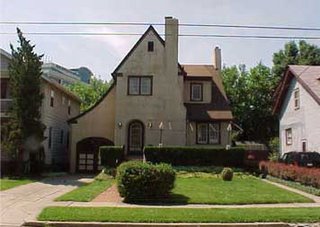
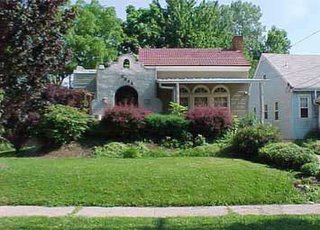
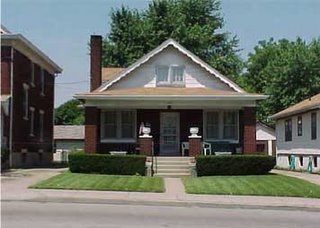 You can see more pictures of this blighted neighborhood at the Institute for Justice website.

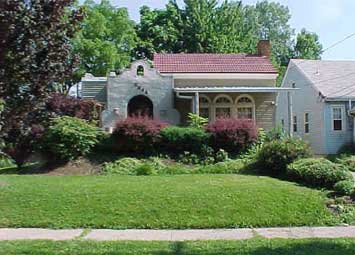
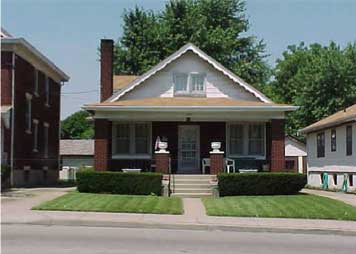 You can see more pictures of this blighted neighborhood at the Institute for Justice website.
Monday, January 09, 2006
For Target & Home Depot
In this news item we find that the power of eminent domain may be used for big box stores:
[Nick Dranias, "Capricious use of eminent domain hampers businesses," TwinCities.com, Jan. 05, 2006]
If you own a small business in Richfield, then you may be targeted for eminent domain abuse. That's because the City of Richfield has placed a bull's-eye on small businesses along Cedar Avenue just west of the Minneapolis-St. Paul International Airport, and plans to remove them in favor of two big-box retailers and other private development.Once again, we have government taking property used by one business to be used later by a different business.
'Our business is location-driven,' says Marv Johnson, founder of Air Carego Shipping. 'It's essential that we be next to the airport.' But Richfield doesn't see it that way. Its plans call for Target, Home Depot and other stores to push Johnson's business out of the location it has been in for nearly 22 years — even though there are other Target and Home Depot stores less than five miles away.
[Nick Dranias, "Capricious use of eminent domain hampers businesses," TwinCities.com, Jan. 05, 2006]
Sunday, January 08, 2006
For the NFL
Here's a another news story about the use of eminent domain to provide a new stadium for an NFL football them, this time for the Indianapolis Colts. Here's something interesting from the story:
Further, note that government has offered only $3.7 million while the owner of the property estimates the cost of moving his business to be nearly twice the offer. Perhaps this suggests, first, a point that has been suggested before on this blog, i.e., the compensation that is paid under the power of eminent domain may be significantly less than a figure we would reasonably consider consistent with the constitutional requirements of "just compensation." Second, if we take the government's offer of $3.7 million as an expression of the value of the property to government, then the property owner's estimate of the costs of moving his business in this case may suggest the property is already in a more highly valued use (from an economic perspective) that would be the case if the property becomes part of the provision of NFL football. Presumably, the point of using eminent domain for "economic development" is that the use for which the property is taken will be a more highly valued use than was previously associated with the property. If the property is put to a less valued use, then we would appear to be talking not about "economic development" but "economic diminishment."
["Editorial: Stadium authority tries an eminent domain end run: Legislature should not let it succeed," Chronicle-Tribune.com, originally published January 5, 2006]
"The government has offered the Hurst company $3.7 million for its property, including the factory building. Hurst officials, according to The Indianapolis Star, have estimated the costs of moving the factory alone at more than $7.5 million, not including the cost of acquiring new land and a new building.Note the suggestion that the use of eminent domain in this case is attempting to take property which is not "blighted," and is property that is actually being used in a successful business.
Indiana's current eminent-domain law is so vague that government can often get by with simply calling a property blighted, whether it is or not. Such would appear to be the case in the Hurst case."
Further, note that government has offered only $3.7 million while the owner of the property estimates the cost of moving his business to be nearly twice the offer. Perhaps this suggests, first, a point that has been suggested before on this blog, i.e., the compensation that is paid under the power of eminent domain may be significantly less than a figure we would reasonably consider consistent with the constitutional requirements of "just compensation." Second, if we take the government's offer of $3.7 million as an expression of the value of the property to government, then the property owner's estimate of the costs of moving his business in this case may suggest the property is already in a more highly valued use (from an economic perspective) that would be the case if the property becomes part of the provision of NFL football. Presumably, the point of using eminent domain for "economic development" is that the use for which the property is taken will be a more highly valued use than was previously associated with the property. If the property is put to a less valued use, then we would appear to be talking not about "economic development" but "economic diminishment."
["Editorial: Stadium authority tries an eminent domain end run: Legislature should not let it succeed," Chronicle-Tribune.com, originally published January 5, 2006]
Friday, January 06, 2006
Eminent Domain for a School
Hey, check this news. A city is going to actually use eminent domain to take land for a public school, i.e., a public use:
"Officials revealed during the meeting that Robert Donellan, owner of land the town wants for the school on Clark Gates Road is being offered $715,000. The town also wants land on Sillmanville Road that is owned by an estate managed by Leo Gold. The estate is being offered $225,000.
[Josh Mrozinski, "East Haddam to start eminent domain proceedings, Middleton Press.com, 1-5-2006]
Subscribe to:
Posts (Atom)